The History of South Africa — A Visual Timeline
From the earliest peoples to today, on one printable timeline your kids can follow, colour in, and actually remember.
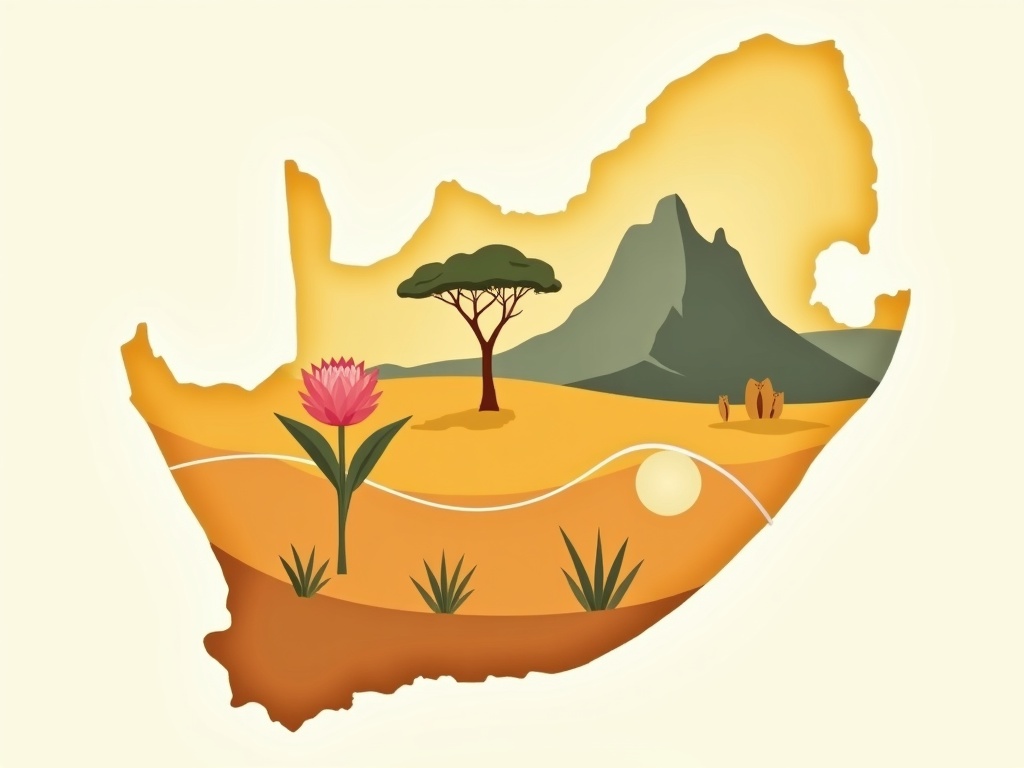
History sticks when kids can see it stretched out in time. We made this timeline for our own wall, and it did something a textbook never managed: it turned “a list of dates” into a story my kids retell at dinner.
There’s a reason for that. A date on its own is just a number to memorise and forget. But put it on a line — with what came before it and what came after — and suddenly it has a place. My daughter stopped asking “do I have to know this?” and started asking “wait, so this happened while that was going on?” That second question is the whole game.
Why a timeline beats a list
When history arrives as a pile of separate facts — a war here, a leader there, a year to underline — kids do what any of us would: they cram it, pass the test, and let it evaporate. Nothing’s holding it together.
A timeline gives it something to hold onto. It shows order (what caused what) and proportion (how recent “modern” South Africa really is, compared to how long people have lived on this land). Once a child can see the shape of the story, the details finally have somewhere to hang.
A date is a number to forget. A place on a line is a story to remember.
The shape of the story
Here’s the sweep the printable lays out — the big rooms of South African history, in order:
- Deep past — the San and Khoekhoe, among the oldest continuous cultures on Earth. Long, long before anyone wrote a date down, people were living, hunting, herding and painting on these rocks.
- Bantu migrations — farming, iron-working and new kingdoms spreading south over centuries, reshaping the whole region.
- 1652 — the Dutch arrive at the Cape to set up a refreshment station for passing ships. It sounds small. It’s the beginning of a collision that runs through everything after it.
- The 1800s — the upheavals of the Mfecane, the arrival of British rule, and then diamonds (1867) and gold (1886), which turned the whole country upside down almost overnight.
- 1910–1994 — Union, the long dark stretch of apartheid, the resistance that never stopped, and finally a hard-won democracy.
- 1994 → today — a young democracy, barely thirty years old, still writing its next chapters. Your kids are living inside this part.
Each era on the printable has a picture to colour and one big question to talk about — because a timeline should start conversations, not end them.
How we actually use it
I won’t pretend we do a formal history lesson off it. We stuck it up in the passage where everyone walks past, and it just… gets used. Someone reads a story or watches something, and we go and find where it lives on the wall. “Which bit of the line is this?” has become a normal question in our house.
A few things that have worked for us:
- Print it long. Tape a few pages together and give it room to breathe. The bigger the gap between eras, the more the proportion lands.
- Colour it in slowly. One era at a time, as you get to it — not all in one sitting. The colouring is doing quiet work while their hands are busy.
- Ask the big question and then be quiet. The point isn’t the “right” answer. It’s the child doing the thinking out loud.
Want the moving version too?
The printable is the one for the wall. If your kids want to play with the same story, we’ve built an interactive South African History Timeline — tap any grade to see what it covers — and a world history timeline that puts our local story next to what the rest of the planet was doing at the same moment.
Download the printable below, print it long, and stick it up where everyone walks past. That’s honestly most of the magic.
The short version
Kids don’t remember history as a list — they remember it as a shape. This printable puts the whole South African story on one line your kids can follow, colour in and argue about at dinner, with a picture and a big question for every era. Print it long, hang it where they’ll see it, and let the conversations do the teaching.
Get this for free
Sign in with Google, Facebook or email to download.
Have your say
Sign up or log in to join the conversation — share a tip, ask a question, or say what worked for you.