How We Ended Up Homeschooling
It didn't happen overnight. Here's the honest, unglamorous story of how we got here — doubt by doubt.

People assume homeschooling was some bold, thought-out decision — that I read the right books, made a plan, and leapt. The truth is far less tidy. It crept up on us, one small doubt at a time.
I was one of those parents, actually — the ones who say, with total confidence, that they could never homeschool their kids. That was me.
Our daughter, the dreamer
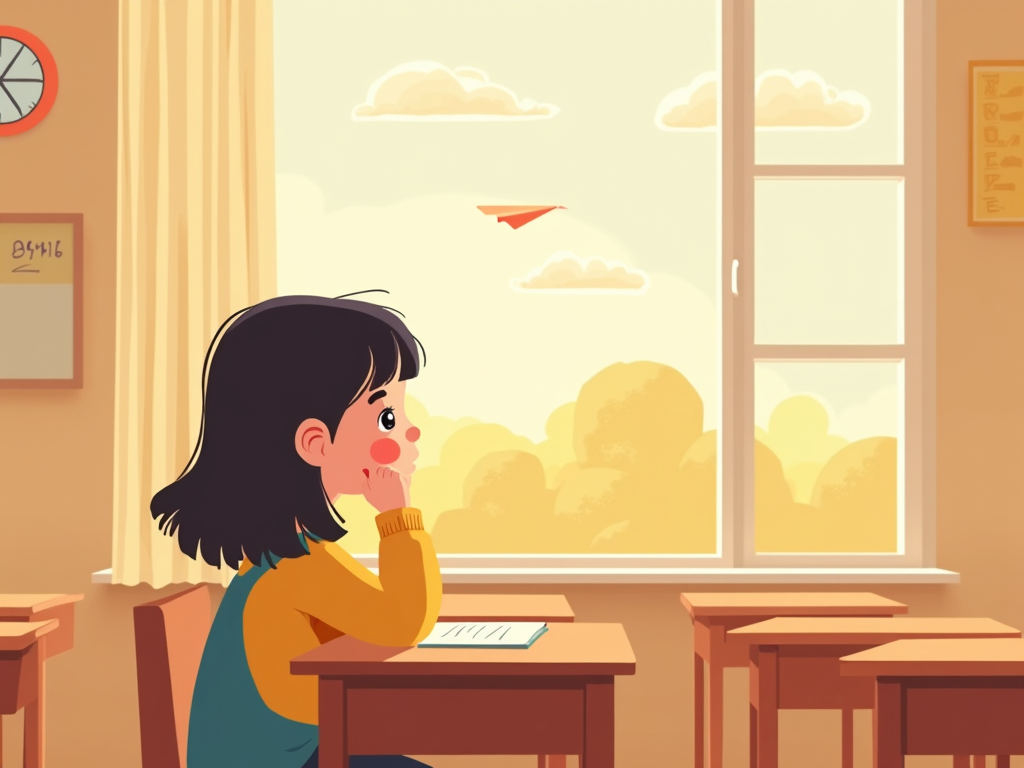
The teachers always had the same word for our daughter: a dreamer. So we knew early on that focus and attention didn’t come easily to her. But she did fairly well through the early years — grade one, grade two, grade three. It worked.
Then grade four happened
Here in South Africa, the school day changes in grade four. Instead of staying in one room, the kids start moving between classes — different periods for different subjects, each one about forty-five minutes long.
That’s where the cracks started to show. My daughter needed a good ten minutes just to settle into each new class. By the time she’d actually landed, the teacher had already moved through the most important part of the lesson — and then they carried on. They don’t stop. The class runs on the schedule, not on whether one child is ready. That’s not the teacher’s fault; it’s simply not how the system is built to work.
The class runs on the schedule, not on whether one child is ready.
Falling behind, then cramming
The gap compounded. By exam time there was always far too much homework — piles of work she hadn’t managed to finish in class. And when the exams came, it was almost as if the material was brand new to her, so we’d cram to get her ready.
There was no real learning in any of that. No understanding, no context for why she was learning something — and certainly no enjoyment.
The tics, and the teasing
My daughter also has tics, and tics get worse under pressure and stress — eye blinking, throat clearing, sudden little jerks in her body. School piled on exactly that kind of pressure, and it began a painful cycle: the more stressed she was, the worse the tics got, and the more the other children noticed.
She started being ridiculed for them. Eventually she couldn’t stand up to do an oral in front of the class anymore, because the other kids would laugh — which, of course, only made everything worse.
Making the call
So it was a hard decision, but we made it. The question everyone asks — the one we asked ourselves too — was how she would socialise. We never wanted to isolate our child.
“But what about socialisation?” is the question every homeschooling parent hears. It deserves a proper answer, so I’ll give it its own article soon.
But in the end it came down to this: she simply wasn’t in a good place anymore. She had started to believe that she was the one who was broken — that there was something wrong with her.
Every afternoon we’d try to put her back together, and every morning school would break her down all over again.
And the hardest part was that it was daily. No amount of love at home could keep pace with the damage being done between the morning bell and the afternoon one.
That was the day the “I could never homeschool my kids” version of me finally went quiet. We brought her home.
And then my son chose it too
Here’s the part I didn’t see coming. My son homeschools now as well — and his story couldn’t be more different from his sister’s. He never really struggled at school. Apart from ADHD and apraxia, both of which were well managed, he did very well there.
So we never pushed him. When he was in grade three, we simply gave him the choice: if he ever wanted to come home and learn with us, we’d love to have him — but it had to be his decision, not ours. At the end of that year, he made it. He wanted in.
He’s in grade four now — his first year homeschooling — and we’re about seven months in. He absolutely loves the way we learn. He still has fond memories of school, and I’m glad he does. But ask him if he wants to go back, and the answer is a firm no.
The short version
Two very different children, two very different reasons — and the same home. That’s the whole story of how we got here.
Have your say
Sign up or log in to join the conversation — share a tip, ask a question, or say what worked for you.